"The future is not some place we are going, but one we are creating. The paths are not to be found, but made."
After decades of existing primarily in research laboratories and theoretical physics papers, quantum computing is finally stepping into the commercial spotlight. The year 2026 represents a pivotal moment where this revolutionary technology transforms from experimental curiosity to practical business solution, with revenues projected to exceed $1 billion and real-world applications emerging across industries from healthcare to finance.
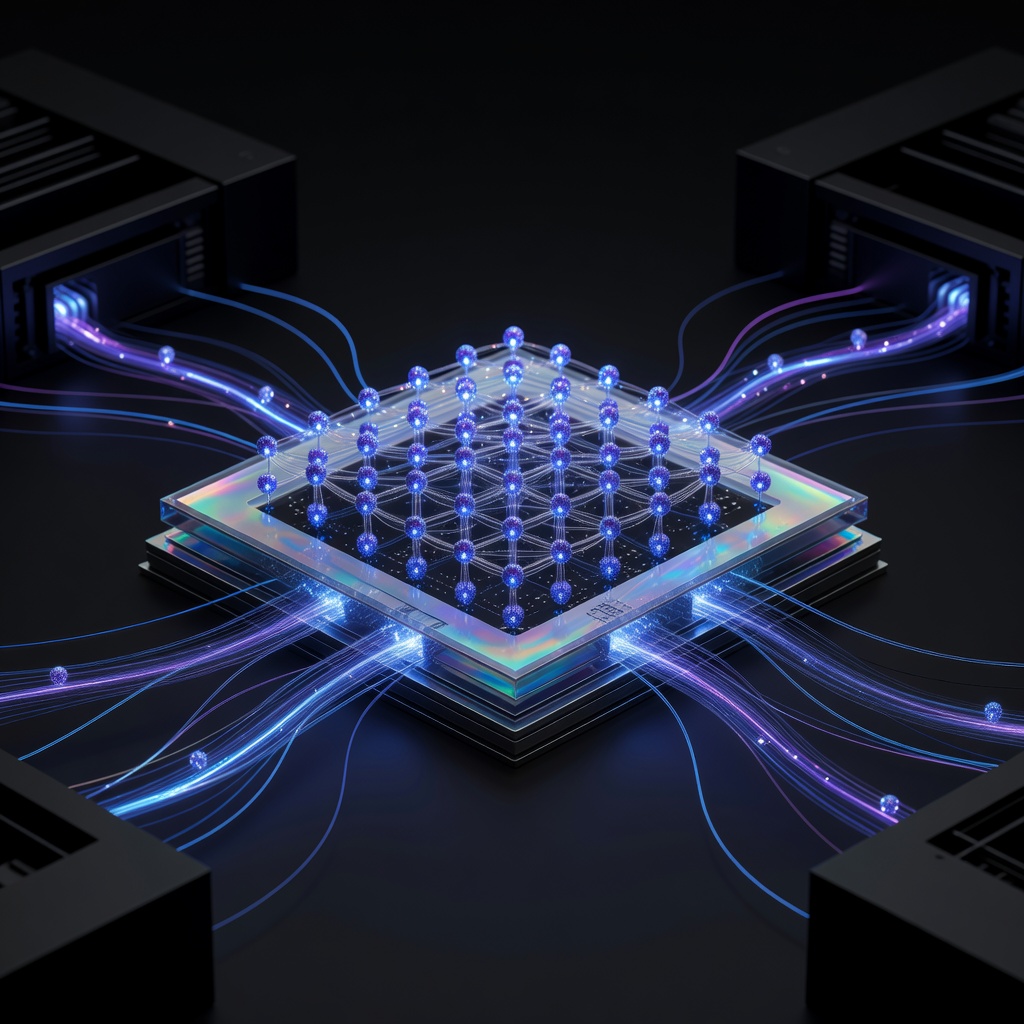
The quantum computing landscape is experiencing a fundamental shift beyond the noisy intermediate-scale quantum era that has dominated recent years. Rather than simply racing to build more qubits, companies are now focusing on creating stable, reliable quantum systems that can actually solve real problems. This involves grouping and controlling physical qubits to minimize errors, developing fault-tolerant systems, and creating full-stack solutions where hardware, software, and algorithms work seamlessly together. Major breakthroughs include Equal1's $60 million funding round for scalable silicon-based quantum computers and researchers in Australia demonstrating an 11-qubit processor using phosphorus atoms in ultra-pure silicon.
The rise of hybrid quantum-classical workflows represents perhaps the most significant practical development in the field. Organizations no longer need to choose between classical and quantum computing - instead, they can leverage quantum processors for complex optimization and simulations while using traditional high-performance computers for routine tasks. This approach, combined with the emergence of Quantum-as-a-Service platforms from major cloud providers, is making quantum computing accessible to businesses without requiring massive infrastructure investments or specialized expertise.
Security concerns are driving unprecedented urgency in quantum development, with 2026 being dubbed the "Year of Quantum Security." While quantum computers pose a potential threat to current encryption methods, they're simultaneously accelerating the development of post-quantum cryptography and quantum-secure communications. This dual nature creates both challenges and opportunities, as organizations must prepare for quantum threats while positioning themselves to benefit from quantum advantages.
Key Takeaway
Quantum computing in 2026 represents the transition from theoretical potential to practical commercial reality, with hybrid approaches making the technology accessible while security applications drive urgent adoption across industries.
The convergence of artificial intelligence and quantum computing is creating powerful synergies that could reshape entire industries. Quantum-enhanced AI models can potentially train large language models in hours instead of weeks, while AI-assisted quantum error correction is accelerating progress toward fault-tolerant quantum systems. Early applications in drug discovery, financial modeling, and supply chain optimization are already demonstrating computational advantages that classical computers cannot match, suggesting that the $45-131 billion market projections for 2040 may be conservative estimates.